

Stop Climbing.
Start Working.
The 3S Climb Auto System takes technicians from ground to top in under 5 minutes — with zero physical effort. Safer teams, faster maintenance, lower costs.
worldwide since 2014
GE
Qualified supplier
— 15,000+ units in GE turbines
CE ETL UL OSHA
Certified & NSW
SafeWork registered
The Problem
Climbing Is Costing You More Than You Think
Every manual tower climb costs 30 minutes each way — before a single bolt is turned. Multiply that across your fleet, your team, and your annual service schedule.
Traditional climb-assist systems only reduce load by 30–40%. Technicians still physically climb, still arrive fatigued, still face repetitive strain risk over a career.
The result is fewer turbines serviced per day, higher injury costs, faster staff burnout, and reduced uptime on assets worth millions.
Watch the Climb Auto System Do the Work.
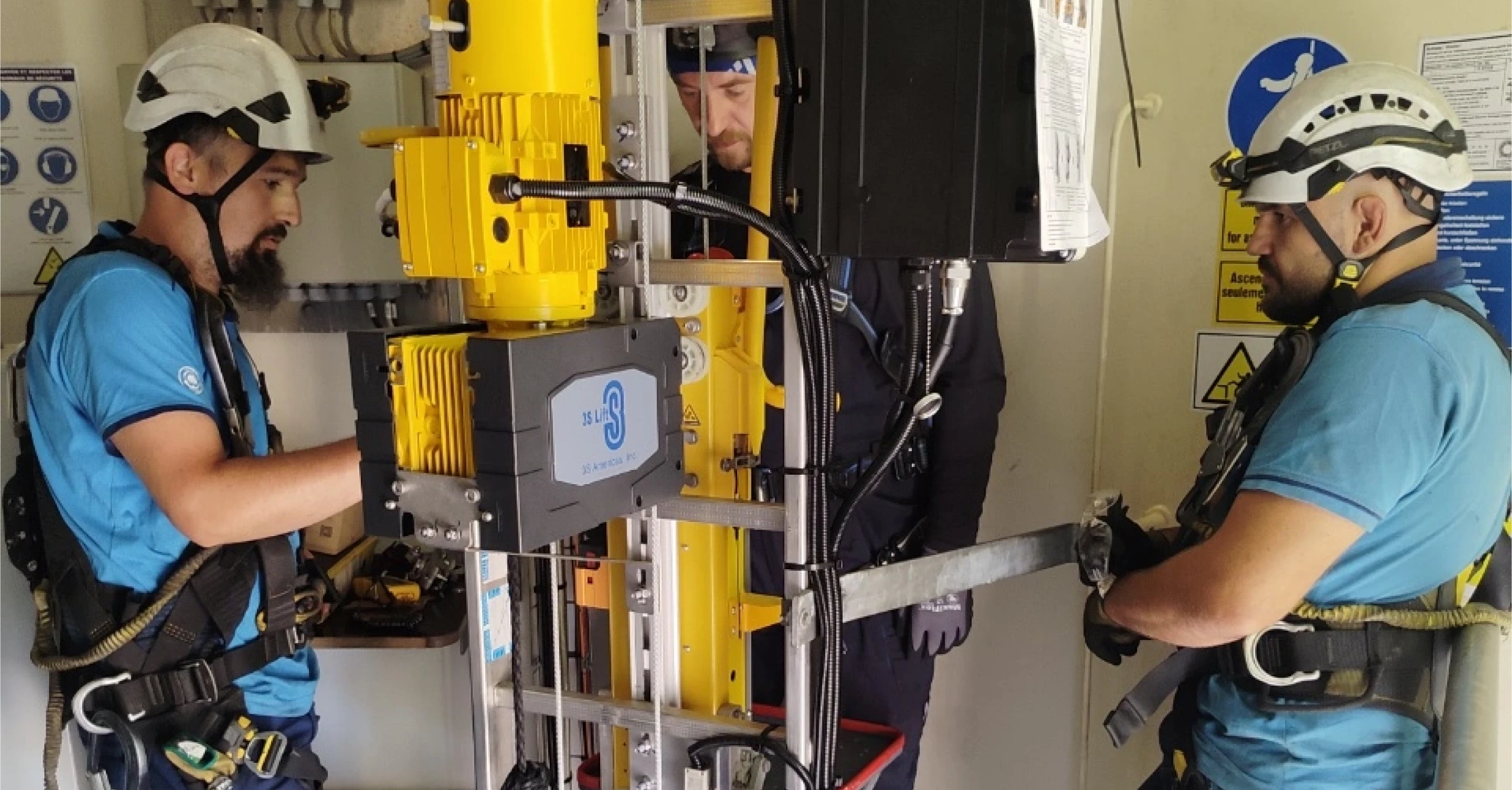
The 3S Climb Auto System mounts directly to the existing turbine ladder — no structural changes. One button press takes a technician from base to nacelle. Smoothly, safely, automatically.
5min
Base to nacelle.
vs 30 min manually.

Button operated
Two-handle start-up switch activates the system. Zero physical climbing from base to nacelle.

Redundant safety
Independent fall protection system alongside the operator’s personal arrester. Double protection at all times.

8-hour retrofit
Mounts to the existing ladder — no structural modifications needed. Operational within a single working day.

Remote control
Call the car to your level or send equipment to a co-worker from anywhere in the tower.
“The Climb Auto System extends the job longevity of our technicians. It’s not just about speed — it’s about keeping great people in the field for longer.”
Neal Gyngard – TCGM, Wind Turbine Operations
See the Difference.
Side by Side.
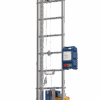
Climb Assist
Reduces physical load by 30–40% but technicians still physically climb. Still fatigued on arrival. Limited to 120m hub height. 10–15 minutes to yaw deck.
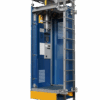
Service Lift
Full-enclosure lift system. Expensive to install, structurally invasive, complicated to maintain. Very low retrofit feasibility on existing towers. No personal fall protection.
recomended
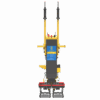
3S Auto Climb System
Button-operated. Zero effort. Base to nacelle in under 5 minutes. Mounts to your existing ladder in 8 hours. Quadruple fall protection. Very high retrofit feasibility on almost all tower types.
Four Steps.
That’s It.
Mounts to your existing turbine ladder. No structural changes. Up and running in 8 hours or less.
01
Step on. Hold both handles.
The two-handle start-up switch is a built-in safety mechanism — both hands must engage simultaneously to begin ascent.
02
Ascend automatically.
The variable frequency drive carries the technician at 18 m/min. No climbing. No effort. Overspeed lockup activates instantly if needed.
03
Hatches open as you pass.
Add the Auto Hatch Opener and platform hatches open and close automatically as the car moves — truly hands-free from base to nacelle.
04
Control from anywhere.
Call the car to your level or send equipment to a co-worker on another platform — via in-car or down-tower remote control.
Key Features

Quadruple anti-fall protection

Three control modes

Overload detection

Power-off electromagnetic protection
Foldable evacuation pedals
Auto platform approach
Overspeed protection
8-hour retrofit — no structural changes
Trusted Around the World
CAS Installation Map
What Wind Technicians Actually Say
After years of manual climbing, experienced wind turbine technicians put the 3S Climb Auto System to the test. Here’s what they said.
“Now after the 3S lift system we don’t have to be worried being worn out after 1 or 2 climbs”
Technical Specifications
Industrial Grade.
Globally Certified.
Construction
Aluminium, steel
Rated Load – Person
120–140 kg (310 lbs)
Rated load — freight
60 kg (132 lbs)
Operating speed
18 m/min
Maximum travel
180 m
Control method
Variable frequency / vectorial
Rated voltage
Single/3-phase, AC 220V, 50/60Hz
400V available on request
Dimensions
468 × 380 × 1410 mm
Also From Standard Access
Complete Wind Maintenance Suite
Standard Access is the authorised Australian distributor for the full 3S wind maintenance product range — covering every aspect of tower access and platform safety.
Auto Hatch Opener (AHO)
Pairs with the CAS for a fully hands-free ascent. Platform hatches open and close automatically as the car passes through each level — eliminating hatch-related fall risk entirely.
Climb Assist
Reduces climbing load by 30–50 kg. CE certified, OSHA compliant. Technicians still climb, but with significantly reduced physical strain.
Service Lift
Full-enclosure lift installed inside the tower, transporting workers and tools from the starting platform to the working platform. Suited to new-build towers or major refurbishment projects.
Australia’s 3S Industry distributor
One relationship. The full range. Local support across Australia.


Getting Started is easy than you think

From first contact to fully operational system — most wind farm operators are surprised by how straightforward the process is. No lengthy procurement cycles. No complex engineering assessments.
Fill in the Parameter Survey
Tell us your turbine type, tower height, ladder manufacturer and number of platforms.
We Assess Compatibility
Our team reviews your survey and confirms whether it fits your existing tower type.
Receive a Quote
You get a tailored quote based on your fleet size and tower configuration.
Installation in a Single Day
The CAS mounts to your existing ladder using only a few bolts.
Ongoing Local Support
Annual inspection services, spare parts and after-sales support.
Frequently Asked Questions
Will the CAS fit my existing tower?
The CAS is designed to retrofit almost all straight turbine towers — including those manufactured by Vestas, GE, Siemens and other major OEMs. Compatibility depends on your ladder type and rung dimensions. Fill in our free parameter survey and we’ll confirm fit within 3–5 business days. Over 130,000 units have been installed globally across a wide range of tower types.
How long does installation actually take?
A trained installer can typically complete the full retrofit in 8 hours — a single working day. The CAS mounts directly to your existing ladder using only a few bolts. No welding, no structural modifications, and no tower downtime beyond the installation day itself.
Is it approved for use in Australia?
Yes. The CF-120E Climb Auto System holds NSW SafeWork Plant Design Registration (HST6-260881/21), issued 13 September 2021 under the Work Health & Safety Act 2011 and WHS Regulation 2017. It is also CE, ETL, UL and OSHA certified, and meets AS/NZS 4024.1204:2019 and AS 1735.9-1994 Australian technical standards.
What maintenance does it require?
The CAS is designed for low maintenance operation. We recommend an annual inspection — which Standard Access can arrange locally. Beyond that, the system has no consumables under normal operation. 3S spare parts are available directly through Standard Access, meaning you have a single local point of contact for both supply and support.
Is it approved for use in Australia?
Yes. The CAS is rated for a wide temperature range and is built from aluminium and steel for corrosion resistance — suitable for coastal, outback, and alpine wind farm environments. The system has been deployed across 40+ countries including regions with significantly harsher conditions than most Australian sites.
How does the CAS compare to Service Lifts?
A Service Lift is a full-enclosure system requiring significant structural installation — typically only viable on new-build towers or major refurbishments. The CAS mounts to your existing ladder in a single day with no structural changes. Both carry technicians at 18 m/min to heights up to 160m, but the CAS has far higher retrofit feasibility and a significantly lower price point for existing fleets.
What safety systems does it have?
The CAS has four completely independent fall protection systems: personal fall arrester, car fall arrester, pull-up fall arrester, and power-off electromagnetic protection. Additional safety features include dual-handle simultaneous start-up, automatic overspeed protection, overload detection, bottom sensing panel, top obstacle sensor, and foldable emergency evacuation pedals. No other turbine access product on the market offers this level of redundancy.
Can it carry tools and equipment as well as a person?
The CAS has four completely independent fall protection systems: personal fall arrester, car fall arrester, pull-up fall arrester, and power-off electromagnetic protection. Additional safety features include dual-handle simultaneous start-up, automatic overspeed protection, overload detection, bottom sensing panel, top obstacle sensor, and foldable emergency evacuation pedals. No other turbine access product on the market offers this level of redundancy.
What is the Auto Hatch Opener and do I need it?
The Auto Hatch Opener (AHO) is an optional accessory that pairs with the CAS to automatically open and close platform hatches as the car passes through. Without it, technicians need to manually lift each hatch — which creates fall and injury risk. With it, the ascent is completely hands-free from base to nacelle. We recommend it for any installation where there are intermediate platforms, which is most Australian onshore towers.