
Less carrying.
More building.
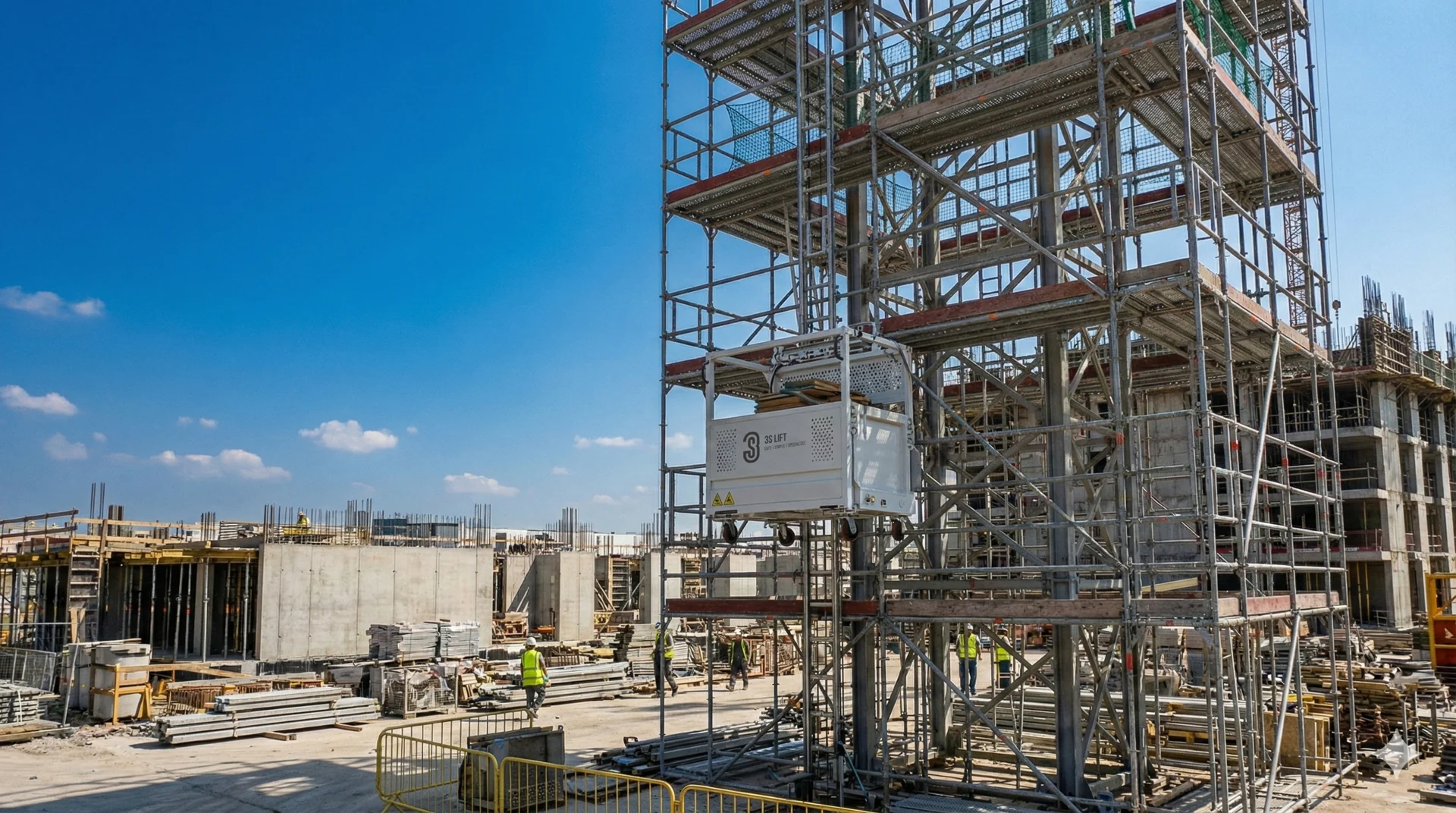
Meet the Scaffold Material Hoist. Move scaffold components, tools and materials to the level you need, with a 300 kg capacity and a cradle that swivels onto the deck.
Built for scaffolding. Backed by Standard Access.
Keep the materials moving
Get your crew back to building.
A dedicated route for materials, from ground level to scaffold deck. Less manual handling and waiting between lifts.
Move more per lift
Carry up to 300 kg of scaffold components, tools and materials in one trip.
Bring the load to you
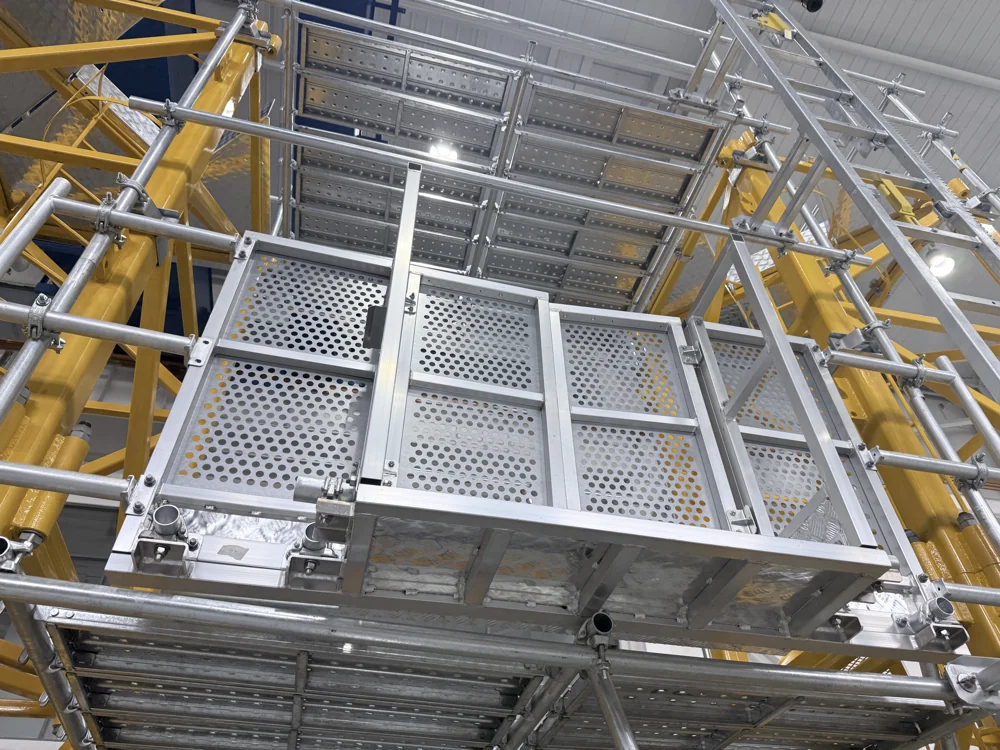
The cradle swivels 90° towards the scaffold deck for a more comfortable unloading position.
Fit alongside the scaffold
A slim mast makes it a practical option where space for a larger construction hoist is limited.
Take it to the next job
A temporary, relocatable system that can be dismantled and reused across projects.
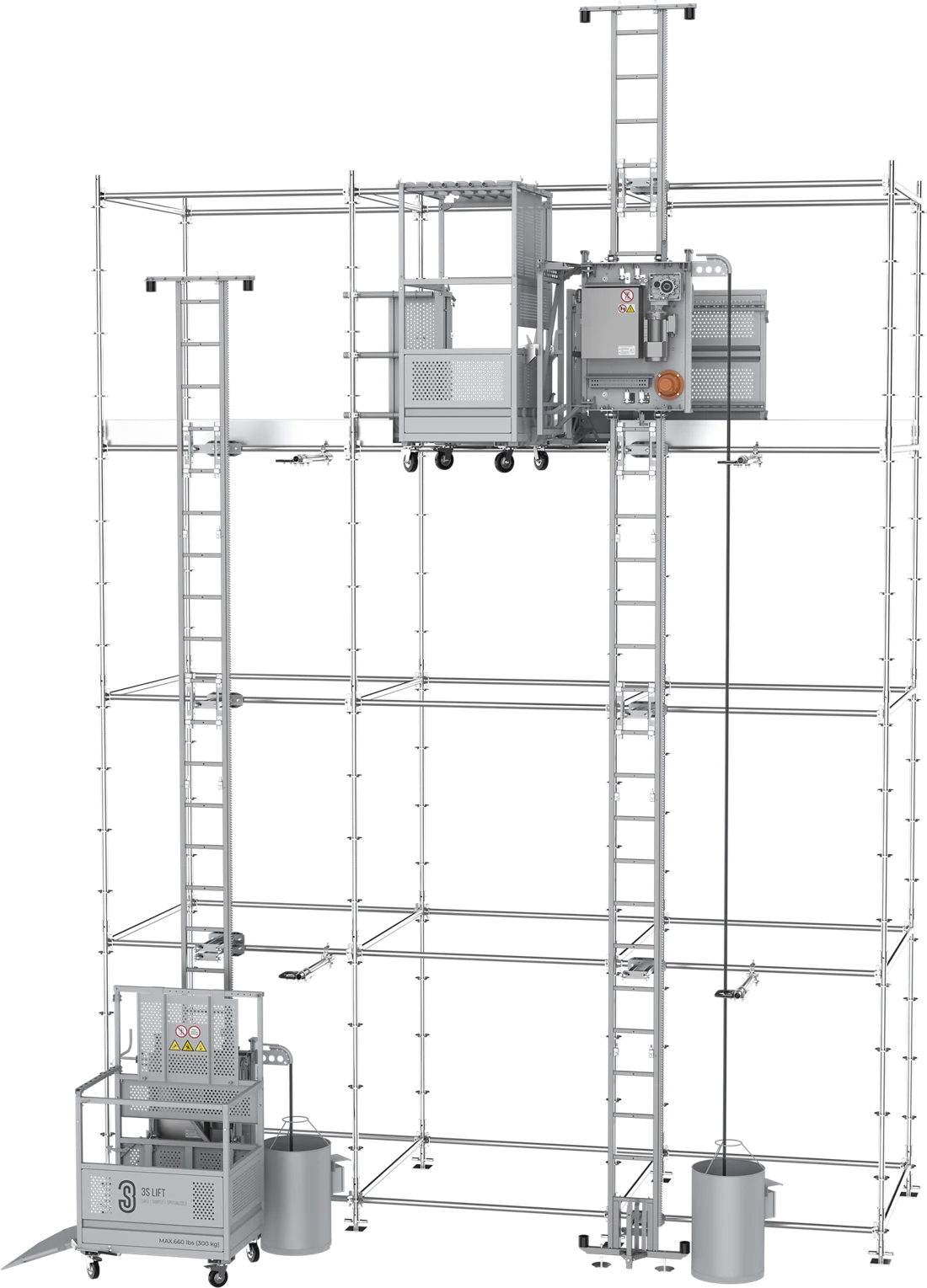
Meet the VH01L300
Big lifting capability.
Compact scaffold profile.
The Scaffold Material Hoist uses positive rack-and-pinion engagement to move materials vertically. Frequency inverter control delivers smooth starts and stops, helping keep material flow steady during scaffold erection, construction and dismantling.
- Purpose-built for vertical material transport
- Mast ties connect the system to the scaffolding
- Modular rail sections suit different lifting heights
- Detachable cradle supports flexible loading workflows
| Maximum rated load | 300 kg |
|---|---|
| Maximum lifting height | 50 m standard |
| Maximum lifting speed | 20 m/min |
| Drive system | Rack and pinion |
| Power supply | 230 V / 50 Hz / 16 A max. |
| Motor power | 2.2 kW |
| Rail section length / weight | 1.96 m / 24.5 kg |
Need to lift higher? Ask Standard Access about a configuration for your project. Scaffold compatibility and installation requirements must be confirmed.
A better way to unload
Lift. Swivel.
Keep the job moving.
At the landing, the cradle rotates 90° towards the scaffold deck, bringing materials into a more accessible position.
A swivel interlock prevents vertical travel while the cradle is turned. Additional detachable cradles can let the crew prepare the next load while another is in transit.
Find the right cradle configuration ↗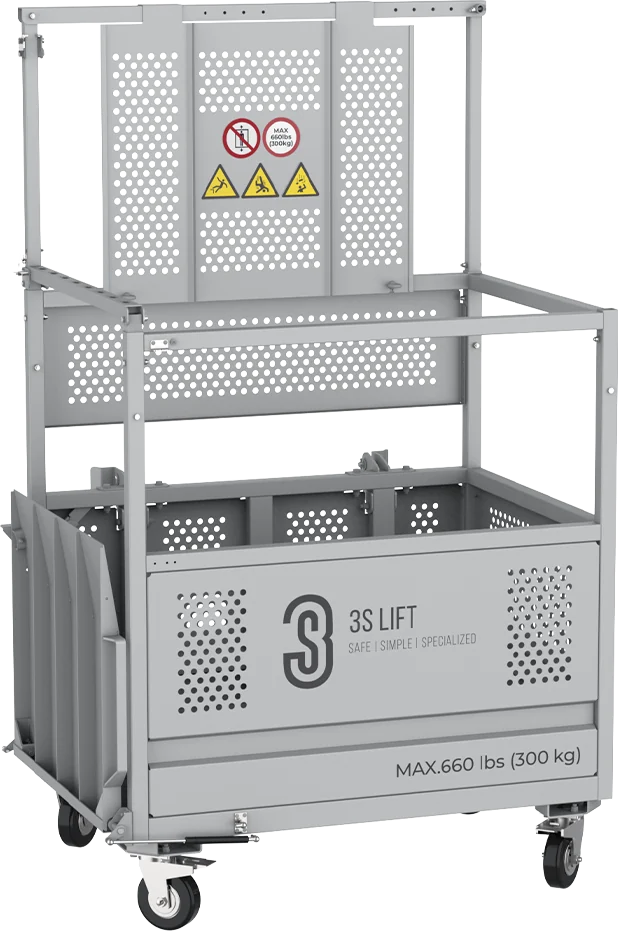
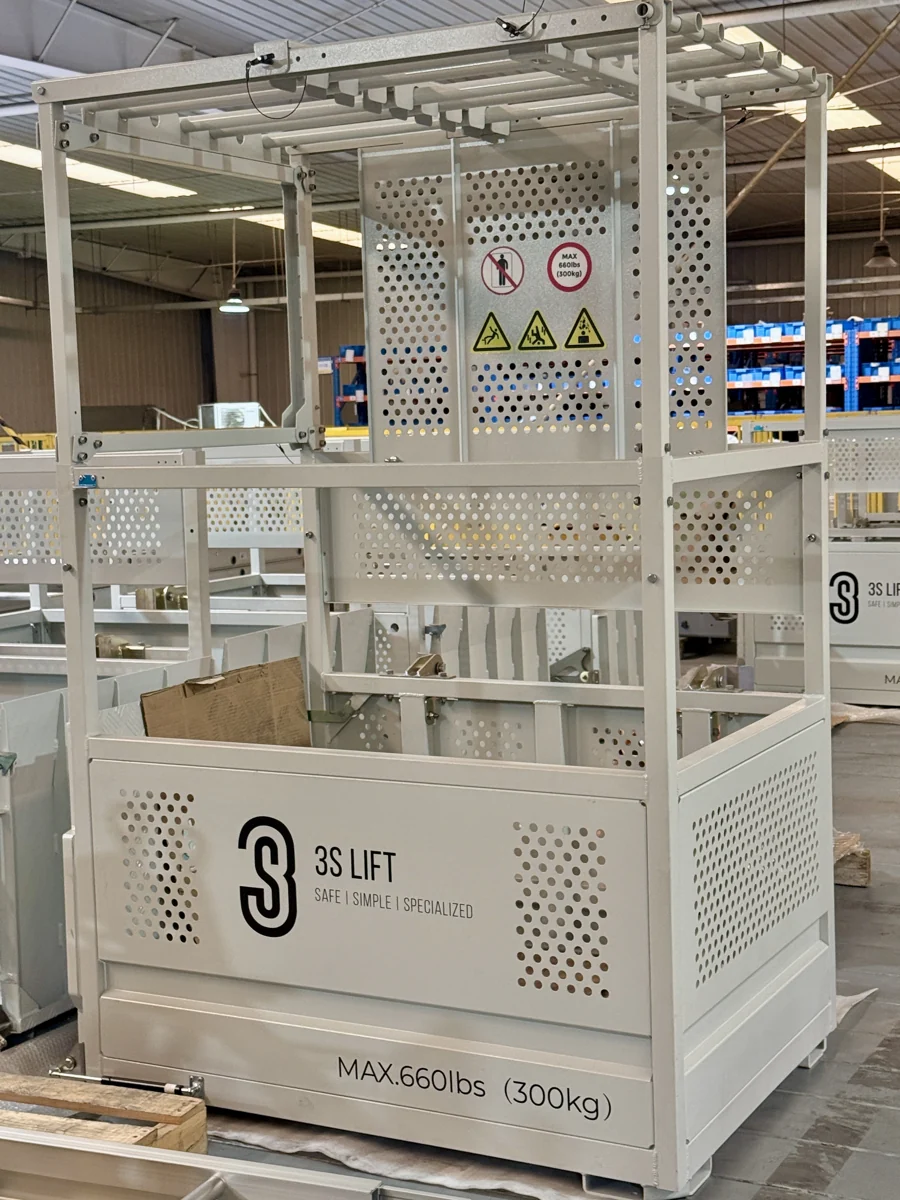
Standard cradle
Transport cradle without extension.
880 × 1260 × 1400 mm
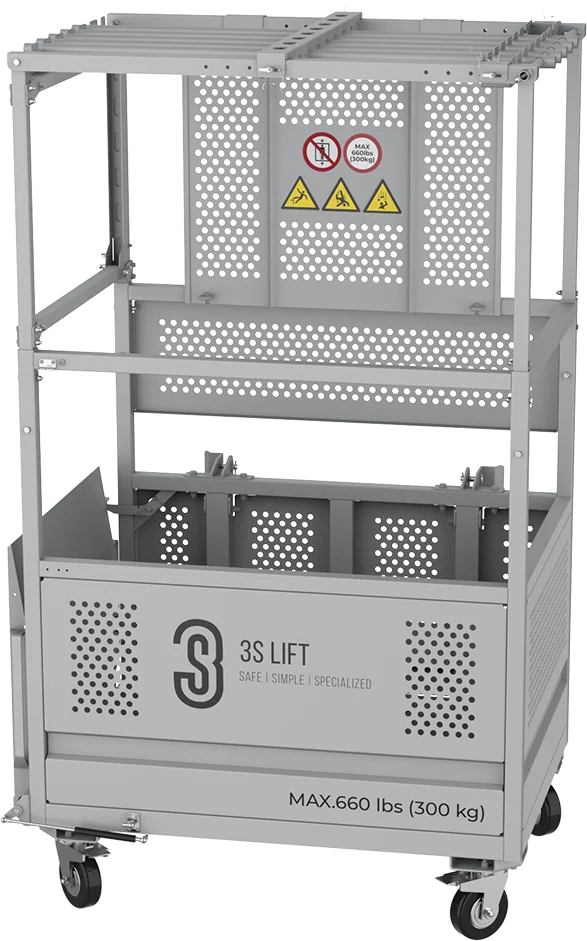
Extended cradle
Transport cradle with extension.
880 × 1260 × 2090 mm
See the system in action
From ground level to scaffold deck.
Watch the Vertical Ladder Hoist demonstration, then take a closer look at the equipment.
Designed around material flow
One system.
Every stage of the job.
Move components to the working level.
Deliver tools and materials during construction.
Support material handling during dismantling.
Controlled lifting. Thoughtful protection.
Safety designed into the system.
Positive gear engagement
The rack-and-pinion drive uses meshing gears to guide vertical movement, without a lifting wire rope.
Interlocked access
Base enclosure, landing gate, ramp gate and cradle swivel interlocks prevent operation when an interlock is open.
Overspeed & overload protection
An overspeed safety device and overload protection form part of the hoist’s safety system.
Controlled travel
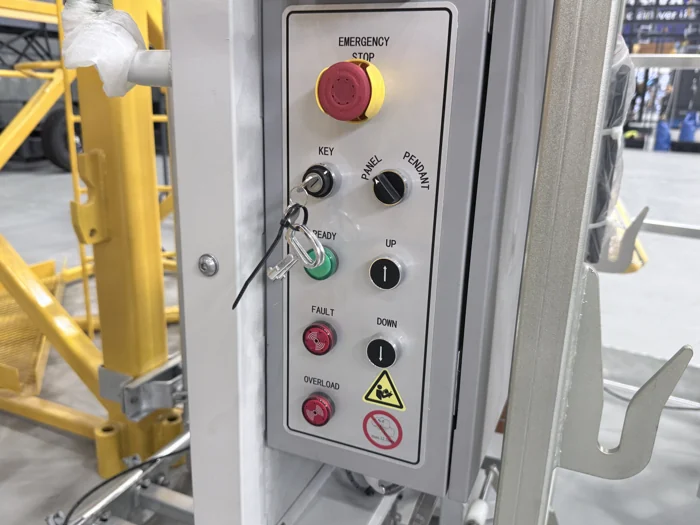
Travel limit switches, emergency stops and frequency inverter control support controlled lifting and smooth starts and stops.
The system, up close
Modular by design.
Build the mast configuration around the lifting height and site requirements.
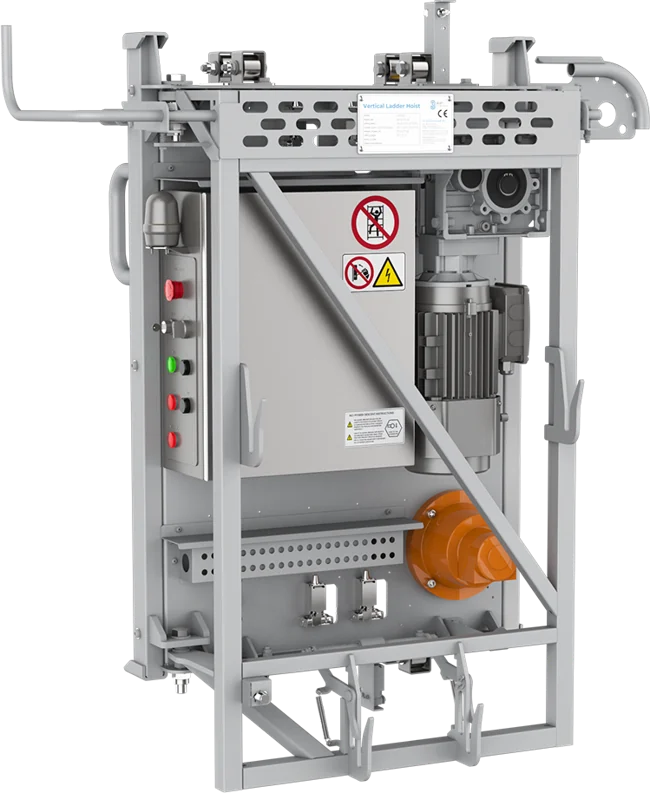
Drive unit
The heart of the rack-and-pinion lifting system.
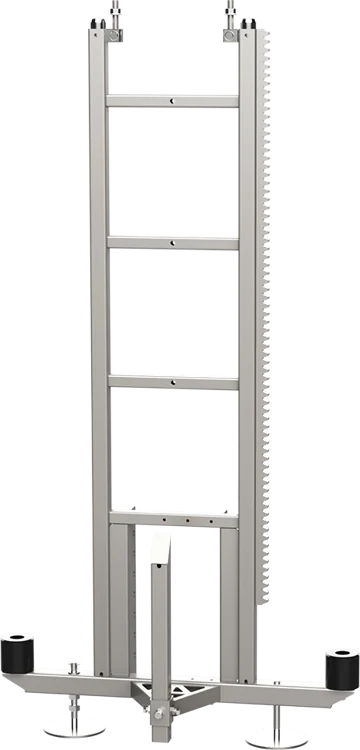
Bottom section
The starting section for the vertical mast assembly.

Standard rail section
1.96 m modular sections, weighing 24.5 kg each.
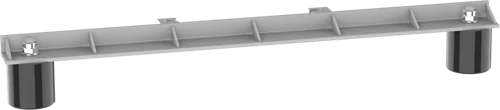
Top section
Completes the top of the mast assembly.
Plan your next setup
Your questions, answered.
Who is the Vertical Ladder Hoist designed for?
Scaffolding contractors and construction teams that need to move scaffold components, tools and materials between working levels. It is particularly relevant where site space is restricted.
How is it different from an inclined ladder hoist?
This is a vertical rack-and-pinion material hoist designed to integrate with scaffolding. It uses a 90° swivel cradle to transfer materials towards the scaffold deck. The inclined 3S Ladder Hoist is a separate product with different capacities, configurations and uses.
Can it lift people?
No. The Vertical Ladder Hoist is intended for transporting materials. It is not a personnel hoist.
Will it work with our scaffolding?
The mast is connected to the scaffold using mast ties. Standard Access can review your scaffold system, tie arrangements, landing levels, power supply and site requirements to confirm a suitable configuration.
What does installation involve?
This is a temporarily installed builder’s hoist. Installation must be planned around the scaffold, mast ties, landing gates and base enclosure, following the manufacturer’s instructions. The manufacturer’s reference setup requires lifting equipment such as a forklift or crane; it is not the tool-free setup used for the inclined ladder hoist.
Can we use additional cradles or increase the height?
Additional detachable cradles can support loading and unloading between lifts. The standard maximum lifting height is 50 m; higher requirements can be discussed with Standard Access. Configuration and availability must be confirmed for your project.
Talk to Standard Access
Put better material flow
on your next job.
Tell us what you’re lifting, how high it needs to go and where you’re working. Our team can help you explore the right Vertical Ladder Hoist configuration.
Call 03 9116 4090sales@standardaccess.global
43 Dunmore Drive, Truganina VIC 3029
Let’s talk about your project.
A few details will help us recommend a suitable setup:
- Materials and typical load weights
- Lifting height and landing levels
- Scaffold system and available space
- Job location and timing
Mention “Vertical Ladder Hoist” in your enquiry.